Western Balkans Youth Forum 2026 Concluded in Budva: Youth Cooperation Sets an Example for the Region’s Leaders
From 4 to 7 June 2026, Youth Forum brought together more than 220 participants in Budva, Montenegro, including over 100 young people from across the Western Balkans, alongside representatives of governments, regional and international organizations, civil society and diplomatic community.
Serving as a regional platform for dialogue, cooperation, and joint policy development, the Forum focused on three key thematic areas: Green and Sustainable Region; Peace, Security and Inclusive Societies; and Skills, Opportunities and Innovation.
Forum was officially opened by Mr. Vladimir Obradović, RYCO Secretary General, H.E. Peter Felten, Ambassador of the Federal Republic of Germany to Montenegro, Mr. Benjamin Haddad, Minister Delegate for European Affairs of the French Republic and Ms. Maida Gorčević, Minister of European Affairs of Montenegro.
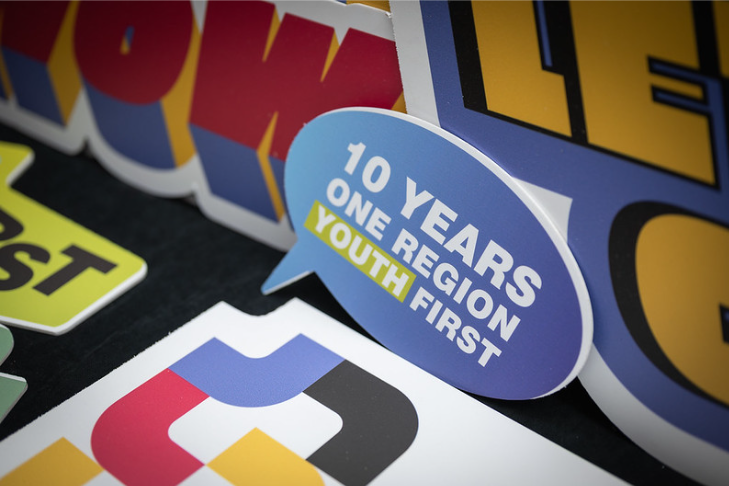
Further on, the opening high-level panel discussion “From Paris to Budva: A Decade of Youth, Dialogue and Change”, reflected on ten years of the Berlin Process and the role of youth cooperation in advancing reconciliation, regional trust-building, and European integration in the Western Balkans
Through panel discussions, thematic working groups, world café sessions, and participatory dialogue formats, young people explored youth mobility, skills development, regional opportunities, resilient societies across generations, innovation, peace and security, inclusion, intergenerational cooperation, participation in decision-making and the role of young people in leading the green transition and contributing to a sustainable and stable region.
The central outcome of the Forum was the development of concrete recommendations, based on a shared vision for the Western Balkans in 2030, that will be further consolidated and presented ahead of the Western Balkans Leaders’ Summit as a contribution of young people to the Berlin Process agenda.
YOUTH Recommendations
In the area of peace, security and inclusive societies, participants called for the establishment of a regional Youth, Peace and Security framework for the Western Balkans, stronger democratic institutions, greater youth participation in decision-making processes, and the introduction of civic and peace education, media literacy, and critical thinking into education systems across the region. Special emphasis was placed on supporting mental health programs, combating disinformation and hate speech, strengthening independent media, promoting regional youth exchanges, and creating safer and more inclusive societies for women, girls, and marginalized groups.
In the field of skills, opportunities and innovation, participants highlighted the need for greater financial support for innovation, young entrepreneurs, and researchers through European programs and regional policies. Particular emphasis was placed on creating programs that would encourage young people educated abroad to return to the region through grants, relocation support, startup incentives, and stronger professional opportunities in local communities.
Recommendations related to a green and sustainable region called for stronger investment in sustainable development, more accessible funding for green initiatives, and greater integration of environmental protection and sustainability topics into formal education programs.
The Western Balkans Youth Forum 2026 reaffirmed the importance of investing in youth cooperation, intercultural dialogue, reconciliation, and regional exchange as essential foundations for a more peaceful, democratic, and interconnected Western Balkans. The Forum also demonstrated that young people across the region remain committed to cooperation and shared European values, sending a strong message of unity and responsibility at a time of growing global uncertainty.
The event was organized by the Regional Youth Cooperation Office - RYCO within the framework of Montenegro’s Chairmanship of the Berlin Process, in cooperation with the Government of Montenegro and with the support of Open Society Foundations, the Municipality of Budva, and The Badgers.