Vujović: The Creative Economy is a Shared Interest of the Western Balkans
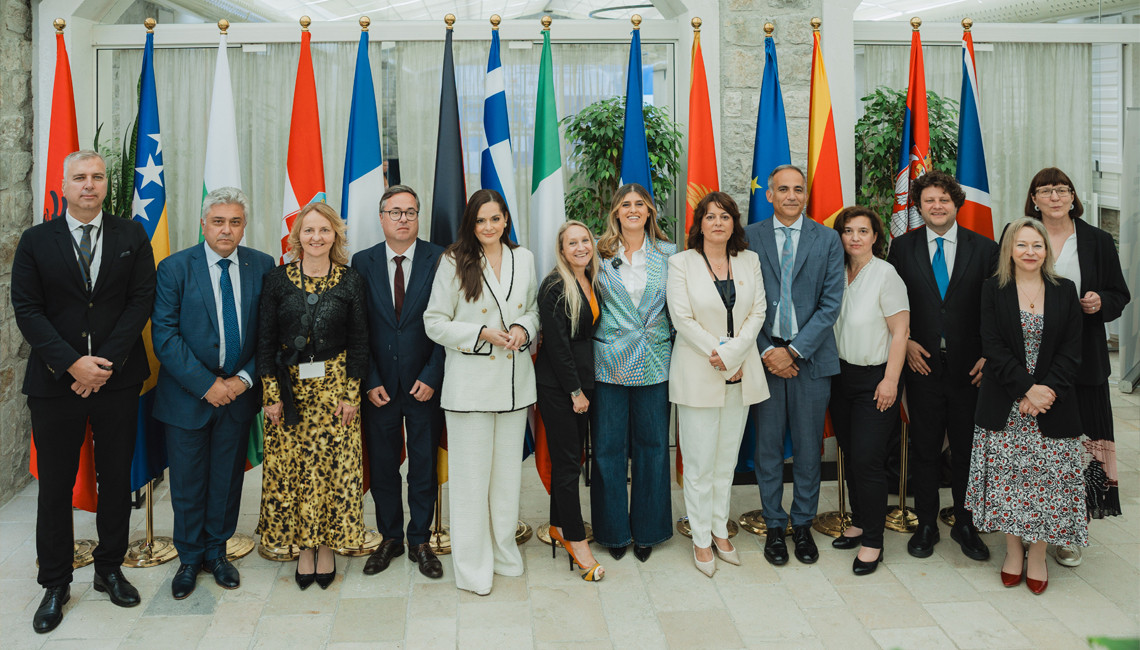
Herceg Novi (17-18 June) – The creative economy is an area in which the shared interests of the Western Balkan countries naturally converge, and the Ministerial Forum on the Creative Economy will help strengthen political support for its development, improve the exchange of experiences, and define common directions for action.
This was stated by Montenegro's Minister of Culture and Media, Dr. Tamara Vujović, at the opening of the Ministerial Forum on the Creative Economy, organized by the Ministry of Culture and Media as part of Montenegro's Chairmanship of the Berlin Process, in cooperation with the British Council in Herceg Novi.
She emphasized that the creative economy is an important driver of regional development and one of the key strategic resources of the Western Balkans.
Vujović noted that Montenegro is chairing the Berlin Process this year, an initiative that for more than a decade has served as an important framework for regional cooperation and for bringing the Western Balkan countries closer to the European Union.
"Today we are gathering at a place where the region's European ambitions and regional initiatives meet. Montenegro is proud to chair the Berlin Process this year, a platform that has for more than ten years been a catalyst for our efforts to join the European family of nations," Vujović said.
Speaking about the significance of the event, Vujović highlighted that it is taking place in the year when Montenegro marks two decades since regaining its independence.
"Over the past 20 years, Montenegro has built the institutions of a modern European state and developed partnerships with European allies," she said.
She also recalled that in early June, Tivat hosted the European Union–Western Balkans Summit at the highest level, from which, she said, a clear message emerged that Montenegro has a realistic chance of becoming the EU's 28th member state.
The minister noted that this year's discussions focus on the creative economy, which connects culture, education, innovation, digital technologies, and the labor market.
"It is a space where creativity becomes a driver of development, knowledge gains economic value, and cultural potential takes on a new role."
She reminded participants that a joint declaration on the development of the creative economy in the region was adopted in Kotor last year. The goal of this year's meeting is to assess how extensively its guidelines have been implemented and what results have been achieved.
According to Vujović, the creative economy is an area where the common interests of Western Balkan countries naturally meet, and the forum should contribute to stronger political support, better exchange of experiences, and the definition of shared priorities.
"We are convinced that the European future of the region depends not only on infrastructure connectivity, economic reforms, and institutional progress, but also on our ability to recognize the value of knowledge, culture, creativity, and innovation as resources that shape the competitiveness of modern societies and contribute to their long-term sustainability."
European Commissioner Glenn Micallef
In a video address, European Commissioner for Intergenerational Fairness, Youth, Culture and Sport, Glenn Micallef, said that the cultural and creative sectors in the European Union employ nearly eight million people and generate close to €200 billion in added value annually.
"Beyond those figures, culture creates a sense of belonging, strengthens societal resilience, and reminds us that we build Europe together - festival by festival, theatre by theatre, and community by community."
Addressing challenges faced by artists and cultural workers, Micallef pointed to the changes brought by artificial intelligence, noting that it is transforming the way culture is created and shared.
He recalled that seven months ago the Culture Compass for Europe was adopted, a document outlining a vision for the development of culture in Europe.
"Europe for culture and culture for Europe."
He also announced that, for the first time in EU history, the Presidents of the European Parliament, the Council, and the European Commission will sign a joint declaration on culture.
"This is a historic moment because culture deserves to be elevated to the highest political level."
Micallef further announced plans to organize a meeting next year with culture ministers from enlargement countries to discuss the future of international cultural relations and cooperation.
He noted that the European Commission is proposing to double the budget for culture in the EU's next long-term budget, enabling additional support for artists, cultural cooperation, and mobility.
He welcomed the fact that all Western Balkan partners already participate in the Creative Europe programme and said that the designation of Nikšić as a European Capital of Culture 2030 will be a significant opportunity for Montenegro to demonstrate the transformative power of culture for cities and local communities.
UK Ambassador Dawn McKen
The United Kingdom's Ambassador to Montenegro, Dawn McKen, said that the creative economy offers one of the answers to challenges facing Western Balkan countries, including youth employment, skills development, and improving economic competitiveness.
According to her, the region shares common challenges such as creating quality jobs for young people, developing skills needed in modern economies, harnessing the potential of digital transformation, and ensuring inclusive and sustainable economic growth.
"The creative economy is much more than the arts. It includes film, television, music, gaming, animation, design, architecture, digital content, festivals, cultural tourism, cultural heritage, creative technologies, and the experience economy."
She stressed that the sector links culture, innovation, entrepreneurship, and skills development, creating jobs, attracting investment, and providing young people with opportunities to build careers in industries shaping the future.
McKen noted that the creative sectors already make a significant contribution to the economic and social development of the Western Balkans, although their full growth potential has yet to be realized.
Referring to the EU Growth Plan for the Western Balkans, she said that growth, competitiveness, skills development, and alignment with European standards are at the center of the region's economic future, and that the creative economy directly supports these objectives.
She also highlighted the British Council's long-standing cooperation with governments, local authorities, educational institutions, businesses, and creative-sector stakeholders across the region.
"No ministry can develop the creative economy on its own. No institution can solve youth employment challenges alone, and no country can realize its full potential in isolation."
EU Delegation: Culture as an Investment in the Future
The Deputy Head of the EU Delegation to Montenegro, Riccardo Serri, emphasized that culture and the creative sector play an important role in strengthening economic resilience, competitiveness, and European integration.
He pointed out that cultural and creative sectors across Europe contribute to employment, attract investment and tourism, support urban regeneration, and foster innovation, with impacts extending far beyond the cultural sector itself.
Regarding EU financial support, Serri highlighted programmes such as Creative Europe, the Instrument for Pre-Accession Assistance (IPA), and the future Agora EU programme, which will have increased funding.
"Since 2021, organizations from the Western Balkans have participated in 331 supported projects and received more than €37 million in funding through the Creative Europe programme."
He also noted that the EU's regional programme Culture and Creativity for the Western Balkans, financed through IPA funds, is investing €8 million in the development of the region's cultural and creative sectors in cooperation with UNESCO, the British Council, and the Italian Agency for Development Cooperation.
Speaking about Montenegro, Serri said the country currently plays a special role in the EU integration process as the most advanced candidate country.
"Montenegro has closed 16 of the 33 negotiation chapters and has made significant progress in the accession process."
He added that the EU also supports projects that connect cultural heritage, tourism, creative entrepreneurship, and local development.
"These projects demonstrate that investing in culture is not an expense, but an investment in people, knowledge, innovation, tourism, entrepreneurship, and long-term competitiveness."
Concluding his remarks, Serri said:
"The creative economy is not only a cultural issue - it is a question of the future. A future that is innovative yet rooted in heritage, competitive yet inclusive, technologically advanced yet centered on people and creativity."
About the Forum
The Ministerial Forum brought together ministers and other senior officials responsible for culture in the Western Balkan countries and participants in the Berlin Process. Its aim was to highlight the importance of the creative economy as a driver of sustainable development, promote cultural heritage and its reinterpretation in the context of economic valorization, and affirm cultural diversity as a factor of social cohesion.
The Conclusions are accessible here.