CEFTA Parties reaffirm commitment to delivering practical results and advancing gradual integration with the EU Single Market
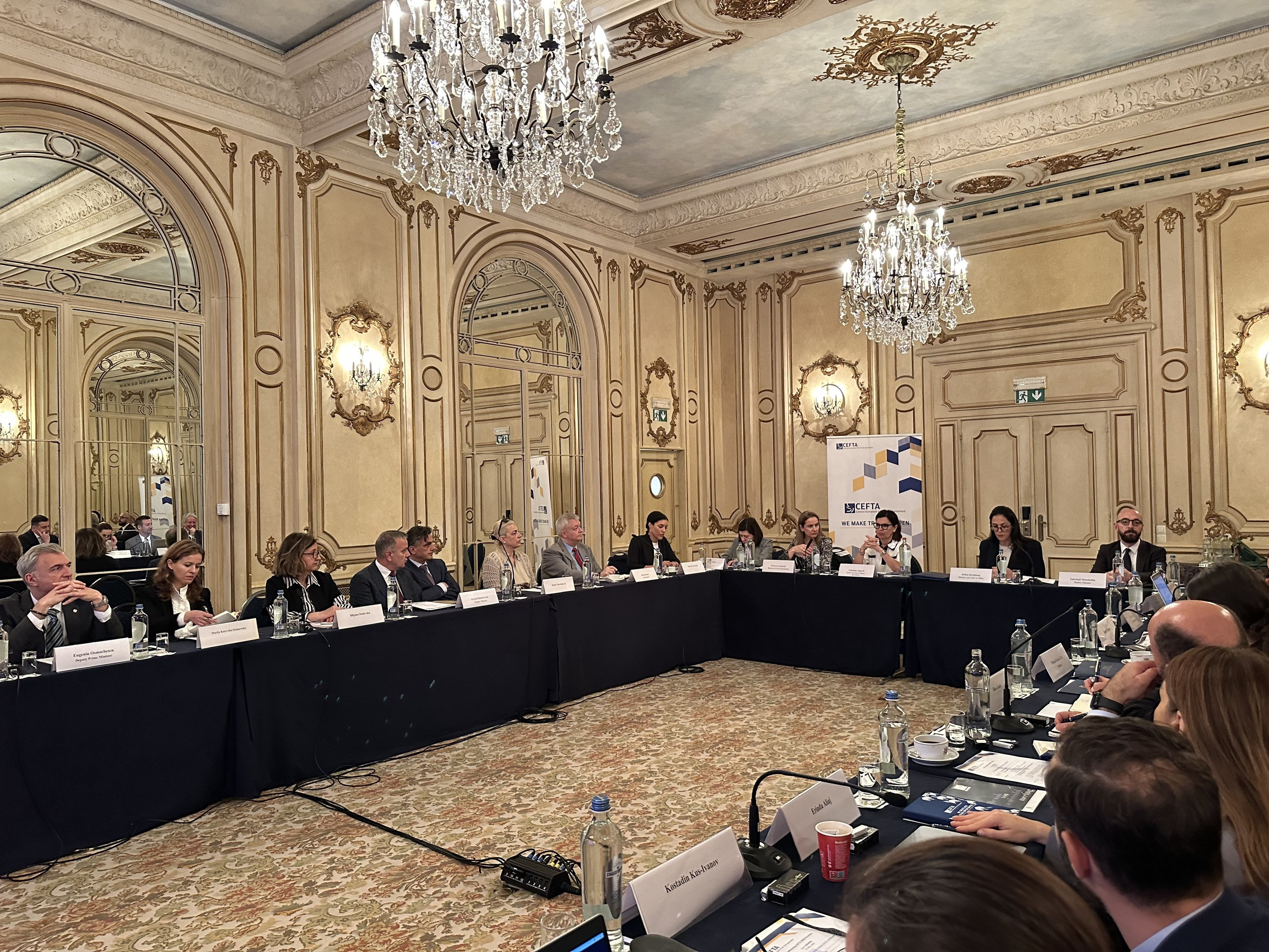
Ministers and high-level officials from CEFTA Parties met in Brussels on Wednesday, 27 May, to discuss how to translate CEFTA 2026 priorities into concrete results for businesses, operators and citizens.
The meeting focused on accelerating key deliverables under the Common Regional Market Action Plan 2025 to 2028 and strengthening CEFTA’s role in gradual integration with the EU Single Market, in line with the EU Growth Plan.
Held at an important moment for CEFTA, as the Agreement marks its 20th anniversary, the discussion confirmed the continued relevance of CEFTA as a practical platform for economic cooperation, trade facilitation, digitalisation and closer alignment with the EU acquis.
Delina Ibrahimaj, Minister of Economy and Innovation of Albania and CEFTA Chair-in-Office 2026, underlined CEFTA’s role in supporting economic integration and preparation for gradual integration with the EU Single Market. She highlighted the importance of reducing trade barriers, improving efficiency at crossing points, advancing digital tools and delivering benefits that are visible to businesses and citizens.
Valentina Superti, Director for the Western Balkans at the European Commission’s Directorate-General for Enlargement and Eastern Neighbourhood, welcomed the progress achieved in recent months and underlined that CEFTA’s work is an essential part of the EU Growth Plan. She stressed the importance of moving from progress to implementation, so that agreed commitments can translate into concrete benefits.
Pranvera Kastrati, Director of the CEFTA Secretariat, noted that CEFTA’s 20th anniversary comes with a strong record of results, but also with important work still ahead. She underlined the need to connect different workstreams, avoid isolated processes and keep CEFTA deliverables fully aligned with EU standards, practices and policies.
Participants reconfirmed their commitment to using CEFTA as a practical platform for gradual integration with the EU Single Market and for delivering measurable benefits through the Common Regional Market.
The discussion showed strong support for advancing priority areas, including the recognition and acceptance of testing and conformity assessment results, harmonisation of working hours of agencies involved in the clearance of goods, facilitation of trade in agri-food products, recognition of advanced electronic signatures, seals and qualified trust services, and further implementation of Green Lanes, SEED+ and paperless trade solutions.
Participants also underlined the importance of maintaining momentum ahead of the high-level summits planned for the last quarter of the year, including the Berlin Process Summit and the Growth Summit.
As CEFTA marks 20 years of advancing trade among its Parties, the focus remains on delivering practical solutions that make trade faster, more predictable and more efficient, while preparing CEFTA Parties for gradual integration with the EU Single Market.