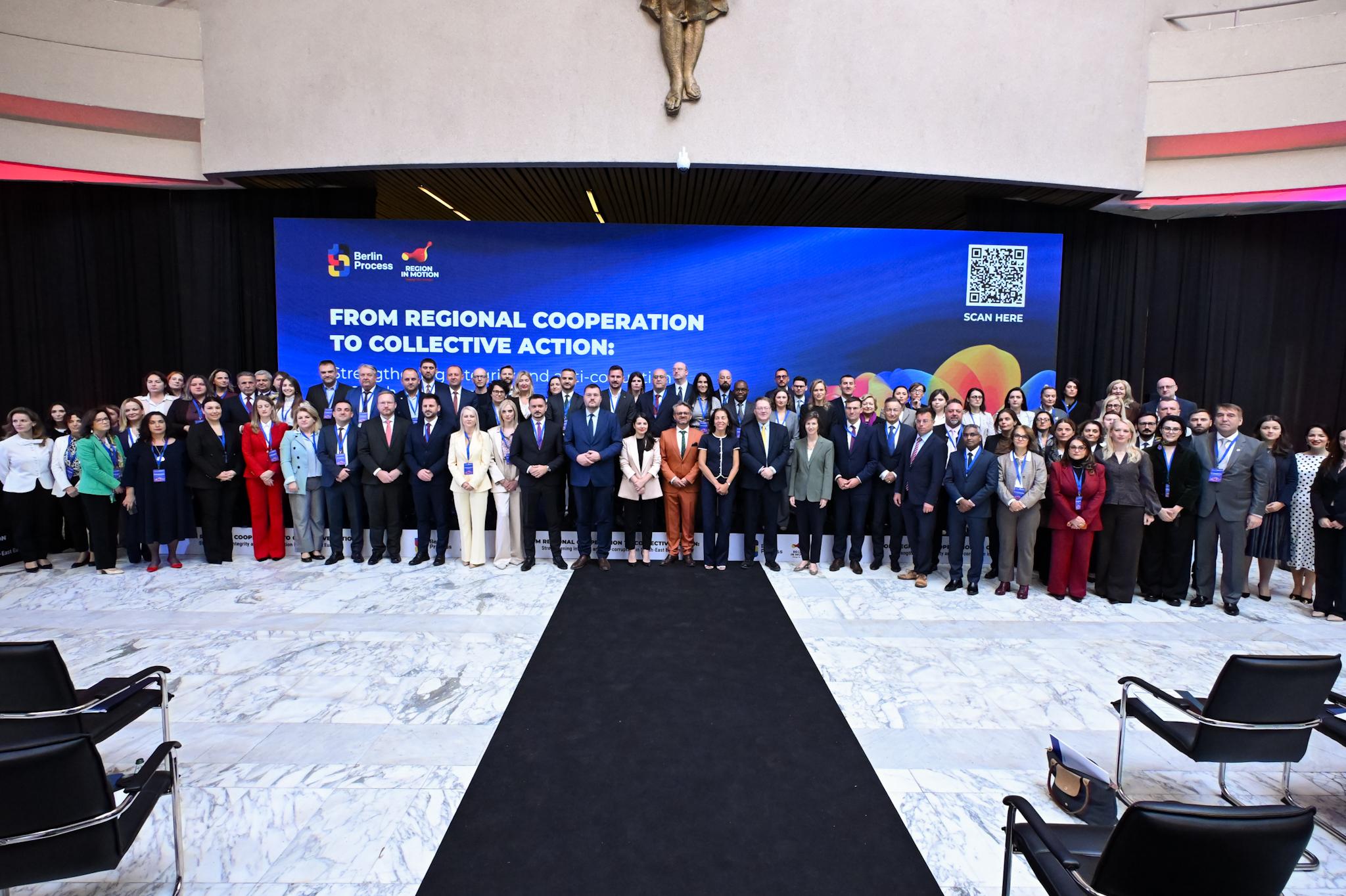
Regional and European leaders, policymakers, anti-corruption practitioners, civil society representatives and international partners gathered in Tirana on 15 October 2026 for the Berlin Process side event “From Regional Cooperation to Collective Action: Strengthening Integrity and Anti-Corruption in South-East Europe”.
The event was organised by the Regional Anti-Corruption Initiative (RAI), in partnership with HELVETAS Swiss Intercooperation, the Government of Albania and Albania’s Minister of State for Public Administration and Anti-Corruption, with support from the Austrian Development Agency (ADA), International Partnerships Austria and the Embassy of Switzerland in Albania.
Through a high-level political dialogue and a multi-stakeholder dialogue comprising four thematic panels, participants explored how regional cooperation can translate anti-corruption commitments into practical reforms. A central message was that progress must be demonstrated through implementation, institutional accountability and tangible improvements in people’s lives.
Discussions highlighted the need to safeguard the political, operational and financial independence of anti-corruption authorities, alongside effective oversight and transparent procedures. Participants called for reforms backed by clear institutional responsibilities, implementation timetables, adequate budgets and verifiable indicators of progress. Asset-declaration verification, conflict-of-interest safeguards and whistleblower protection were among the priorities identified.
Regional cooperation was emphasised as a practical means of advancing these reforms. Participants highlighted opportunities to strengthen practitioner networks, exchange tested approaches and coordinate responses to cross-border corruption risks. These included exploring secure cross-border information exchange to support the verification of asset declarations and address illicit financial flows. Discussions also considered how regional efforts can support alignment with EU anti-corruption standards and priorities.
The event underlined that integrity depends on participation across society. Transparent municipal decision-making, access to public information, citizen involvement in planning and budgeting, and public monitoring of resources can make accountability more meaningful at the local level. Civil society, independent media, community groups and responsible businesses were recognised as essential partners in shaping reforms and monitoring their implementation.
Participants also examined emerging corruption risks in migration and environmental governance, as well as the potential of digital tools and artificial intelligence to support prevention, detection and oversight. They stressed that technology should address clearly identified institutional needs and be accompanied by safeguards for data protection, privacy and security, with meaningful human oversight.
Proposed follow-up steps include developing a concise regional agenda identifying lead institutions, practical activities and indicative timelines. Joint capacity-building, peer exchanges and the adaptation of effective anti-corruption tools were identified as opportunities for RAI, HELVETAS and regional partners to take forward.
The conclusions call for sustained dialogue between public institutions, civil society, businesses and international partners, with progress assessed through measurable results. The event reinforced the role of regional cooperation in supporting accountable institutions, public trust and the Western Balkans’ EU integration.
The official summary is available for download here.